
Throughout this blog series, we've traced the evolution of precision optics from design and simulation through prototyping and scaling to production. Part 1 covered the role of innovation, systems-level engineering, and intellectual property protection in advanced optical systems. Part 2 addressed the transition from simulation to prototype and scaling for high-volume manufacturing. Now, we conclude with a technical dive into delivering consistent optical quality at scale, optimizing alignment and tolerances, and building robust processes to safeguard performance.
Making a Cost-Effective, High-Precision Design
When a customer brings a precision optical design to us, our optical engineering team conducts an optical tolerance analysis (a process that assesses allowable variations in optical components without degrading performance) to ensure it performs in production. This involves the advanced simulations discussed during the design engagement in part 1 of the series. The analysis is a thorough engineering exercise that seeks to understand how the design would behave during manufacturing, surface potential issues to be solved, and identify opportunities to improve performance. The goal is to ensure the design performs well and can be manufactured rapidly with strict tolerances.
This analysis inspects the interfaces where optical components join. Accurate alignment at these joints is critical to ensure that optical energy flows through the system with minimal loss, that the beam direction is accurate, and that the beam quality is good. Slight misalignments of optical components can result in loss of optical power, deviations in beam pointing, beam quality, and divergence. By evaluating an optical design with an optical tolerance analysis, the calibration range of the positioning and accuracy of the optical components, lenses, and fiber-optic cables at each optical connection or junction can be determined before assembly.
Our team measures optical signal power and quantifies distortions and aberrations at each optical junction. This identifies the calibration limits for each junction, beyond which power loss degrades performance. Once analysis is complete, we often refine the design—consolidating components, reducing part count, and simplifying assembly. We may also revise lens prescriptions or adhesive formulas to ensure the new design matches or surpasses the current version while improving manufacturability and reducing cost. This delivers true value engineering for our customers.
Active Versus Passive Alignment
The above analysis produces a range of tolerances required for each optical component. However, an assembly method must now be selected to produce an optical system that meets these specifications. Fortunately, the tolerance analysis informs the most practical approach to assembly and production. Based on the required precision, speed, and complexity, either active or passive alignment techniques can be used to align each component. Each comes with its own tradeoffs.
Active alignment involves iterative testing and adjustment at each junction to maintain performance. Sensors or detectors provide feedback on alignment quality. Adjustments at one junction can affect optical power at another, requiring precise, rapid back-and-forth alignment and measurements to achieve optimal placement. The measurements enable the most optical power transfer with minimum component assembly and placement time during manufacturing. Active alignment is more complex and time-consuming, but it delivers high precision for complex assemblies.
Passive alignment does not use sensors or measurements; instead, it relies on the design and fabrication of optical components that have more forgiving tolerance requirements. Such components are often designed to be joined quickly and simply, with minimal loss of optical power, despite their simple assembly procedures. Passive alignment is faster to perform, simpler to implement, and can lower assembly costs. While passive alignment can achieve tight tolerances, creating them is usually reserved for active alignment, which can achieve much tighter tolerances for a lower cost.
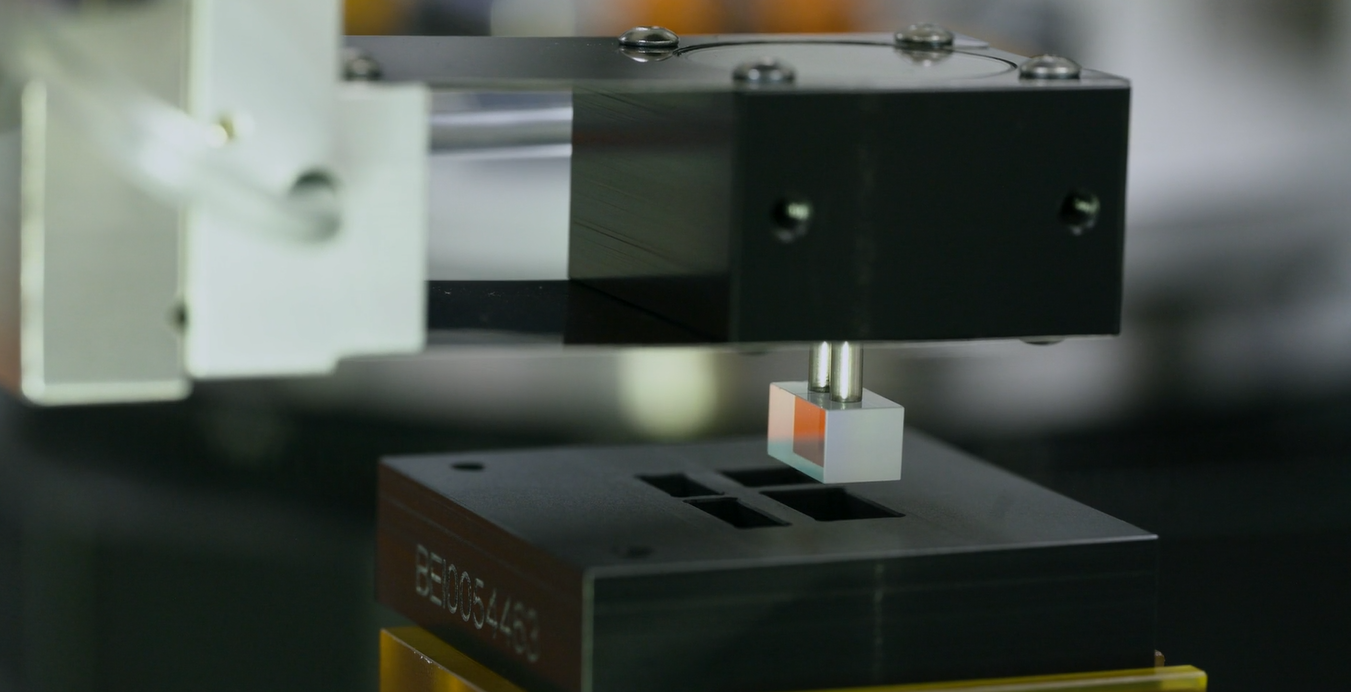
It is typical to use both active and passive alignments in the system, depending on the requirements of each optical component and how those requirements affect the system’s optical performance. Benchmark's optical engineering team will regularly use passive alignment in certain areas to reduce cost, while using active alignment in other areas to further improve performance and reduce the effects of errors introduced by the passively aligned parts.
Optical design software also aids alignment by predicting the effects of tolerances on manufacturing requirements. This is done by performing sensitivity analyses and Monte Carlo simulations. Once the required simulation parameters have been defined, optical design software can support tolerance modeling by estimating performance levels for various alignments within the optical tolerance range. The impact of changes at one optical junction can be assessed by how alignment affects the optical power levels at other junctions within the entire design.
A system assembly evaluation compares the tolerances achieved with passive alignments versus active alignments to determine the optimal, cost-effective manufacturing approach. Ultimately, alignment methods need to balance speed, complexity, and precision, as they must often align multiple optical components simultaneously for manufacturing. Environmental factors, such as shock, vibration, and temperature, also affect alignment stability and should be considered during development.
One Platform for Both Prototyping and Production
After completing analysis and choosing alignment methods, prototyping begins. Benchmark utilizes a proprietary prototyping and assembly platform that integrates these methods with robotics and automation to assemble prototypes and their housings with precision, using robotics, vision systems, and programmable methods. This approach enables quick design iterations, and much of the automation needed for production is already in place, allowing for rapid transition from prototyping to scaled production.
The result is an automated manufacturing approach that meets the strict tolerances our customers require. Such an advanced manufacturing process can precisely position optical components to fiber-optic cables, collimators, and other optical components with minimal optical power loss. It can deliver high-quality products for diverse industrial, medical, and military applications, from prototyping to production.
Launching Production and Ensuring Quality
Benchmark’s optical tolerance analysis and the resulting automated optical assembly process support the rapid, precise, and cost-effective production of prototypes and production units. However, ensuring product quality during production is a different challenge. Optical precision is often difficult to maintain as production scales up. Speeding up alignments reduces accuracy; shortening adhesive curing times impacts reliability; and issues that statistically only reveal themselves with higher volumes can be challenging to solve. That’s why we employ production equipment capable of real-time reporting on optical alignment quality, enabling testing and implementing adjustments during production to improve yields. The levers we can adjust include modifications to alignment methods, adhesive amount, time to cure the adhesives, and assembly speed, among others.
The production process features careful handling and fixturing in designated cleanrooms, along with protocols to minimize the risk of contaminating optical components. We ensure that trained production personnel are involved early, typically in the design phase, as they provide valuable guidance on implementing practical optical interfaces and assembly techniques. The result is an automated manufacturing process that employs multiple feedback mechanisms to ensure quality and reliability, including autocollimators (instruments for measuring angles of optical elements), interferometers (devices for measuring wave interference and precise distances), lasers, vision systems, and the production personnel and engineers themselves.
Repeatability is also vital. Automated assembly enables this with manufacturing equipment capable of the resolution, speed, and accuracy needed. The systems we employ have the resolution necessary for micron-level precision and can move quickly to the same spot over and over during production. We also use advanced vision systems for adhesive dispensing and alignment to help reduce cycle times while improving product quality.
These customizable automated optical assembly systems demonstrate our in-house precision optics expertise. We have seen great success with this approach in improving designs, ramping production, and reducing time-to-market.
Precision optical systems represent the pinnacle of interdisciplinary engineering, where simulation, prototyping, and scalable manufacturing converge to create products that truly matter. As we've seen throughout this series, a thoughtful end-to-end process—one that incorporates manufacturing and lifecycle requirements from the very first design—is essential to achieving breakthrough performance and market leadership. At Benchmark, we’re committed to empowering innovators with the expertise, technology, and security needed to realize next-generation optical solutions. If your team is ready to take the next step or if you face challenges scaling your optical designs, reach out to us. Together, we can build optics that make a difference.


