
Manufacturers have long viewed collaborative robots, “cobots,” as the gateway to safer, more flexible automation. But as robotics adoption accelerates and human-robot interaction becomes more complex, global standards committees are challenging the industry to rethink robotic safety. Their message is clear: it’s not the robot that’s collaborative, it’s the entire application.
With new ISO 10218-1/-2:2025 and ANSI/A3 R15.06-2025 standards now in place, the shift from “collaborative robot” to “collaborative application” is reshaping how robots are engineered, deployed, and marketed across the manufacturing world, pushing robot Original Equipment Manufacturers (OEMs) to find manufacturing partners such as Benchmark who understand the downstream effects of deploying collaborative applications in real production environments.
Applying Collaborative Application Principles on the Factory Floor
For years, manufacturers used the term cobot to signal built-in safety. But as Todd Dickey, chair of the R15.06 committee, explained, “There is no such thing as a cobot, only robots that utilize collaborative technologies.” In this view, there is no special robot that is automatically safe simply because it is branded or labeled as a cobot.
The revised standards acknowledge this perspective. Achieving safe collaboration requires a comprehensive approach to system design—one that considers every element, from tooling and workspace layout to operator proximity, sensor integration, and user interface. The standards intend to ensure that each facet of human-robot interaction is addressed proactively, with safety at the forefront.
One way to understand this shift is to look at how these principles are applied on an active manufacturing floor.
At Benchmark’s Winona, Minnesota, facility, a collaborative automation cell uses multiple robotic arms working simultaneously within a predefined, virtually fenced workspace. Rather than relying solely on physical guarding, safety is achieved through coordinated motion control, system-level awareness, and continuous monitoring of both robot and human activity.
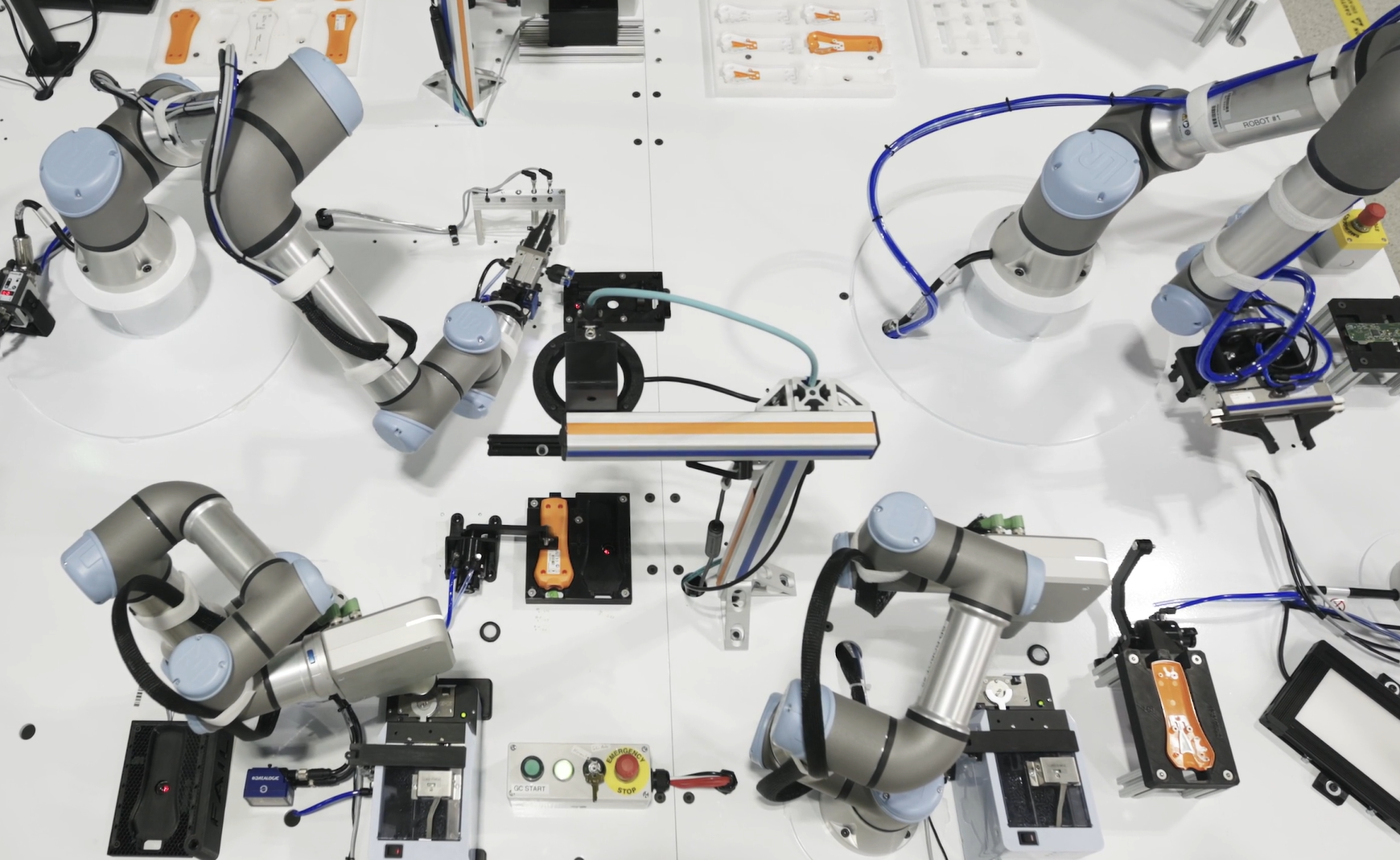
Within the cell, the robots actively communicate with one another to manage shared work zones. As a robot prepares to enter a shared workspace, it announces its position to the other robots in the system and verifies that the space is clear before proceeding. This data exchange helps prevent unintended robot-to-robot interactions and ensures coordinated movement across the cell.
Human awareness is also built directly into the application design. Each station on the robot table is equipped with illuminated indicators that signal upcoming robot movements. Green lights alert nearby operators when a robot is approaching a station, while red indicators flag stations that are low on consumables. These visual cues support safe human interaction without requiring operators to constantly monitor robot motion.
Multiple layers of protective measures are integrated throughout the system. In addition to individual emergency stops on each robot, the table includes emergency stop buttons tied to all robots in the cell, allowing operators to halt the entire system quickly if needed. The robots themselves operate under restricted power settings, continuously calculating the required force and automatically stopping if unexpected resistance is detected, limiting potential impact in the event of a collision.
Beyond motion safety, the application incorporates process verification into its collaborative design. Sensors confirm part capture during handling, torque values are tracked and recorded, and automated optical inspection (AOI) verifies fastener installation. These checks support both product quality and operational confidence while reducing the need for manual intervention within the cell.
Internal operating systems like this provide practical insight into how collaborative applications function over time—not just in theory, but in daily production. That experience reinforces the idea behind the updated standards: collaboration is not defined by the robot alone, but by the way sensing, motion control, tooling, layout, and human interaction come together as a unified system.
How Robotics OEMs and Users Must Adapt
The change in definition poses significant implications for both manufacturers, robot OEMs, and contract manufacturers such as Benchmark who develop and manufacture robots for OEMs. Safety considerations must now extend to the system level, requiring engineers and integrators to design work cells around thorough risk assessments, protective strategies, and safeguards that prioritize people. It is no longer sufficient to focus solely on the robot; the entire application—including every aspect of the work cell—must meet the definition of collaborative and safe operation. OEMs especially must take note as their product strategies must evolve rapidly.
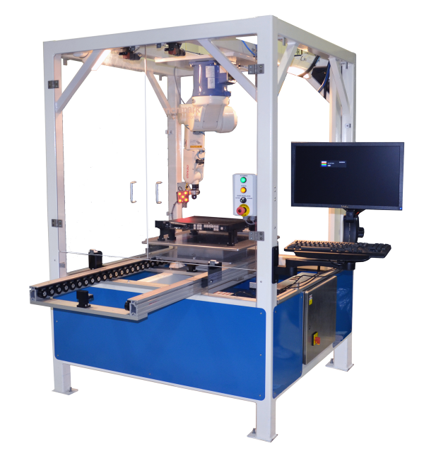
For OEMs in particular, robots can no longer be assumed to be, or marketed as, “collaborative” on their own. Instead, robotics companies should:
- Identify an experienced engineering and manufacturing partner to help respond to these changes quickly, ideally choosing one that understands how to implement robotics in its own factories.
-
Design robots for integration into a larger collaborative application, using industrial design to incorporate feedback from all possible users, developing comprehensive functional testing to ensure strict specifications are met, and ensuring an effective product launch.
-
Focus marketing on the specific technologies and design principles that enable safety and collaboration, such as advanced optical sensors, torque sensors, force limitation, proximity monitoring, and other electromechanical features.
-
Guide customers on how to use their robots within a collaborative application to support safe deployment and ensure systems continue to operate as intended after delivery.
This evolution presents both a challenge and an opportunity for OEMs. By adopting a system-wide approach to safety, companies can position themselves as leaders in collaborative application safety and, by demonstrating expertise beyond the robot itself, expand their influence within the broader operational environment.
Safety Innovations Are Accelerating
Fortunately, robotic technologies have evolved rapidly to support this more holistic approach to safety. Recent advancements include:
-
Integrated force and torque sensors in robot joints for real-time collision detection and force and speed limiting.
-
Speed and separation monitoring, using cameras, scanners, IR, ultrasonic, or 3D sensors to modulate robot movement depending on human proximity.
-
Teach-and-guide operation, which prevents the robot from moving unless actively guided by an operator, allowing the operator to safely manipulate a robot arm to teach it the path it should follow.
-
Advanced protective stops and emergency-stop redundancy using well-positioned safety sensors.
These innovations enable the integration of robots into truly collaborative applications, allowing them to work more safely and intelligently than ever before.
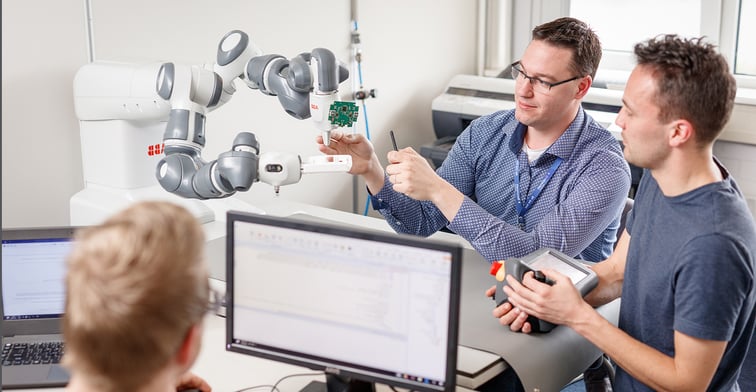
Perhaps the most significant technological advancement in recent years is in the field of Artificial Intelligence (AI) and machine learning. These technological advancements allow robots to adapt to new situations, improve their performance over time, and make intelligent decisions based on real-time data. For example, there have been applications where AI enables the robot to identify defects during incoming inspection, optimize actions based on feedback, and enhance the overall quality of products being built in a manufacturing setting.
However, AI’s role extends beyond enhancing robotic performance; it is becoming a critical factor in advancing collaborative safety. Through continuous learning and real-time analysis of sensor data, AI-driven systems can identify and address safety risks more rapidly than traditional methods. Advanced vision systems, powered by AI, enable robots to distinguish between people, objects, and backgrounds, adjusting their movements accordingly. Industry 4.0 advancements, including predictive analytics, IoT sensor fusion, and digital twin technologies, further support a proactive approach to safety, allowing collaborative systems to anticipate risks and intervene automatically when necessary—by reducing speed, stopping operations, or adjusting workflows.
How Collaborative Applications Will Shape the Future of Manufacturing
The next phase of robotics will accelerate productivity, relieve workers from repetitive or physically stressful tasks, and improve quality through continuous learning and precision. Notably, collaborative applications are no longer reserved for high-volume environments; they’re becoming increasingly viable in low-volume, high-mix production where flexibility is essential.
As robots become easier to deploy and reconfigure, the pace of adoption is set to increase. Market forecasts for collaborative robotics predict annual growth rates between 18.9% and 31% through 2030, with the sector expected to expand from $2.14 billion in 2024 to $11.64 billion by the end of the decade.
These technologies are particularly effective in use cases such as machine tending, assembly, palletizing, inspection, welding, pick-and-place, and precision dispensing—applications where close human-robot collaboration can deliver measurable gains in efficiency and ergonomics.
As collaborative application standards continue to evolve, manufacturers and robotics OEMs will need to rethink how safety, usability, and system integration are addressed—well beyond the robot itself.
Companies that both design and operate collaborative applications in production environments are often better positioned to anticipate downstream challenges, including operator interaction, scaling, and long-term support (our recent robotics webinar covers best practices).
For organizations evaluating how these standards will affect future robotics strategies, learning from real-world implementations can be an important first step.
Whether customers need support with concept development, prototyping, system integration, or scaling robotics into full production, Benchmark provides the engineering and manufacturing expertise to ensure robotics applications are safe, reliable, and optimized for performance.
Contact us here to learn how Benchmark works with robotics OEMs and manufacturers navigating collaborative application design.


