Project Overview
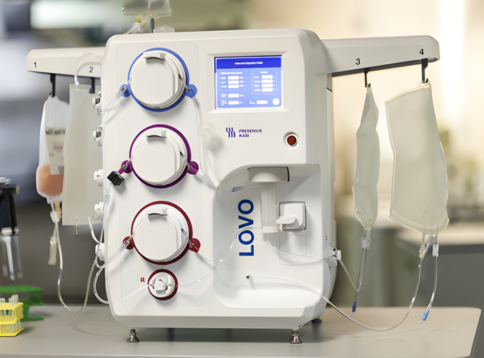
Fresenius Kabi is a global health care company specializing in medicines and technologies for infusion, transfusion and clinical nutrition. After facing design challenges for their automated blood cell processing system concept, LOVO, they engaged Benchmark Electronics to help move their idea to marketable reality. The collaboration created the only cell processing system in the world that washes and concentrates white blood cells using filtration technology.
User Research
The first step in the project was for Benchmark to conduct voice-of-customer research with LOVO’s intended end users and gather final product requirements. Not only did the LOVO device need to do its intended job, its design, features and functionality needed to take into account where, how and by whom the device would be used in a variety of labs and medical facility settings. An internal Benchmark team conducted the research, reviewed the learnings, compiled requirements and consolidated these findings into a comprehensive document that would guide the design and development processes.
Challenges and Solution
The LOVO product provides critical blood processing services to chronically and critically ill people. The technology was sophisticated: working with blood processing, ensuring sterility throughout the system and adhering to precision weight scales — were just a few of the key medical and scientific challenges Benchmark faced. The device had to work — every time — and simultaneously meet strict and stringent medical device regulations.
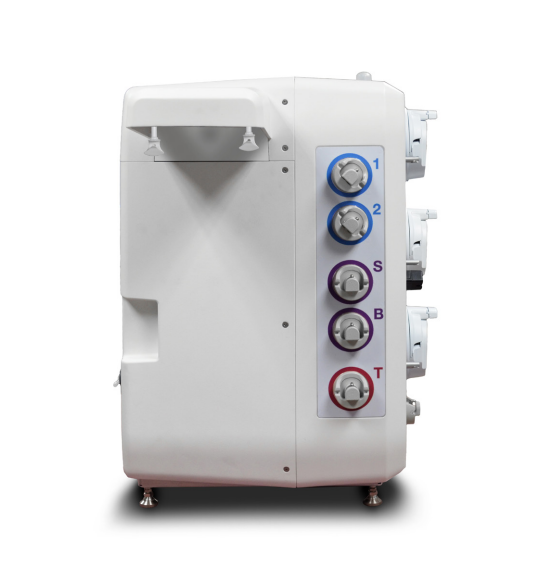
Based on marketing specifications and usability inputs, Benchmark developed multiple concepts. Ultimately, key Benchmark functional design areas, including industrial, mechanical and electrical, collaborated on a final design for the system and disposables. The teams set out to create a platform that could use as much of the existing Fresenius Kabi-developed components and subassemblies as possible and design and produce new components as needed to complete the project.
Printed circuit board assemblies for hardware control, system electrical power and safety circuits were designed based on existing schematics plus new electrical designs from newer requirements.
Benchmark Takes the Lead
Working collaboratively with the LOVO product team, Benchmark took the customer through a complete engineering development process to a fully realized, manufactured, agency-approved, commercially available product.
Benchmark played the lead role in:
• Industrial design activities, design verification and manufacturing validation
• Process development collaboration
• Mechanical integration of available components
• Mechanical design of precision weight scales
• Electrical design to support legacy hardware plus new hardware
• Electrical power distribution plus safety circuits
• Together, Fresenius Kabi and Benchmark launched a product that is enhancing and saving lives every day.